I'm the main designer on KYC, working closely with the product manager and the engineering team. I own design end-to-end: interview scripts, prototypes, A/B test design, high-fidelity screens, dev handoff, and post-release design QA. The role isn't "wireframer", it's "designer who owns the outcome." If the funnel doesn't move, that's mine to figure out.
My role & team
Process
The process is a loop, not a waterfall. Every cycle starts with a real conversation: a user mid-onboarding, before any sketch exists. From there, pull the Mixpanel funnel and Fullstory sessions to find where the conversation matches the data, and where it doesn't. Brainstorm the smallest test that would prove or disprove the hypothesis. Ship it, sometimes as an A/B test on the live flow, sometimes as a fresh redesign on the new design system. Then back to the data: did the metric move? Why or why not? Bring it back to the user in the next interview cycle.
The loop has run continuously since September 2025, and the redesigns shipping today are the result of dozens of laps around it.
User research
Both tracks, the live A/B tests and the new design system flow, were anchored by the same research foundation. We talked to users who finished KYC, users who got stuck, and users who quit halfway. We watched Fullstory sessions to see exactly where people hesitated, and we mined support tickets for the patterns that never make it into interviews.
- [40+] User interviews
- [3] User segments
- [6] Markets
- [200+] Fullstory sessions reviewed
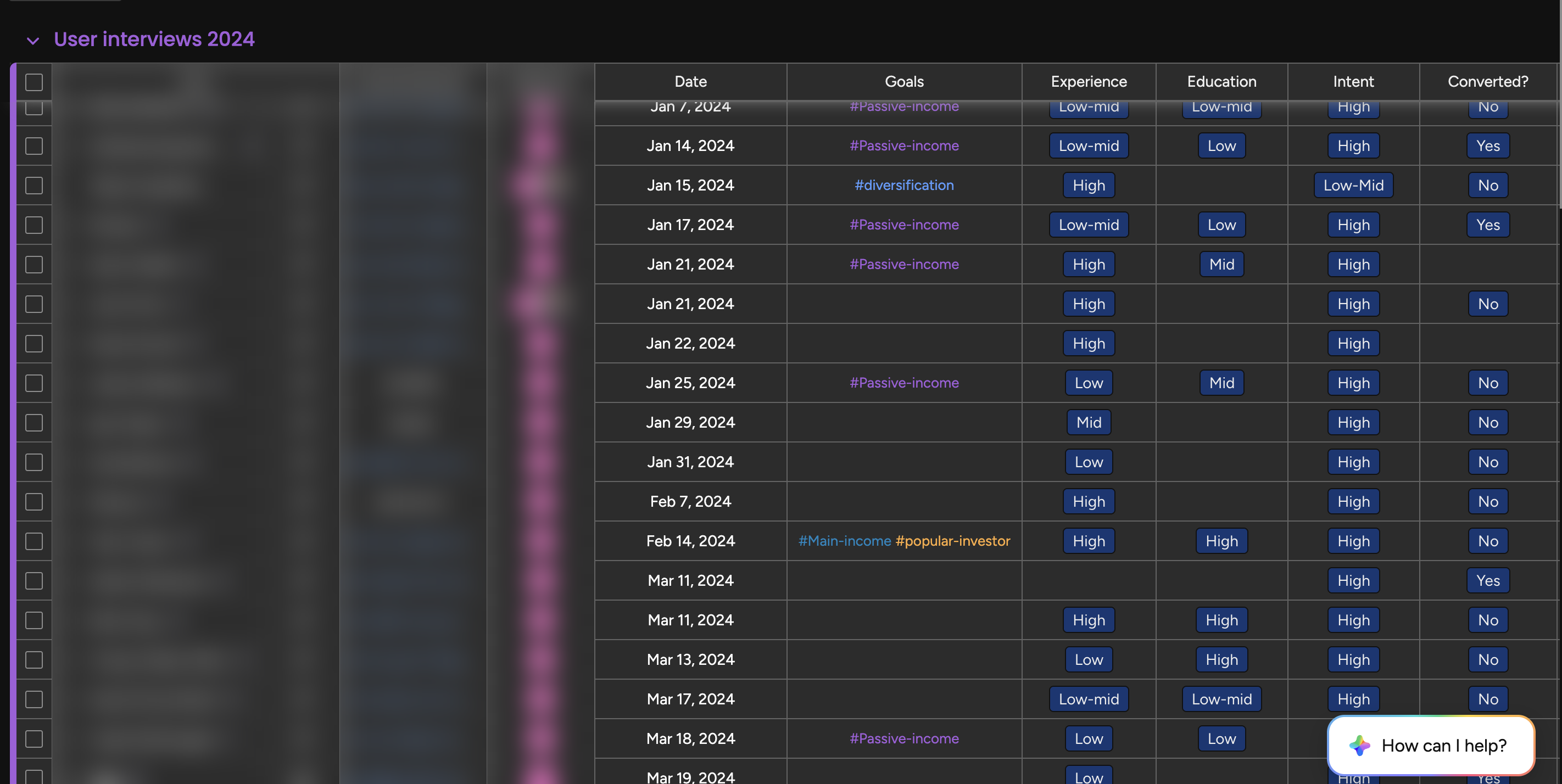
Three patterns kept coming back across segments, and shaped every decision that followed.
-
Is there any monthly subscription fee or trading fee included with my eToro account?
New user · onboarding interview -
I signed up to invest in XXX but I don't think it is available on eToro.
New user · onboarding interview · asset name anonymised -
When I got on board with eToro, what I found is that I could only use my credit card.
New user · onboarding interview
The qualification flow
Desktop, shipped and live today
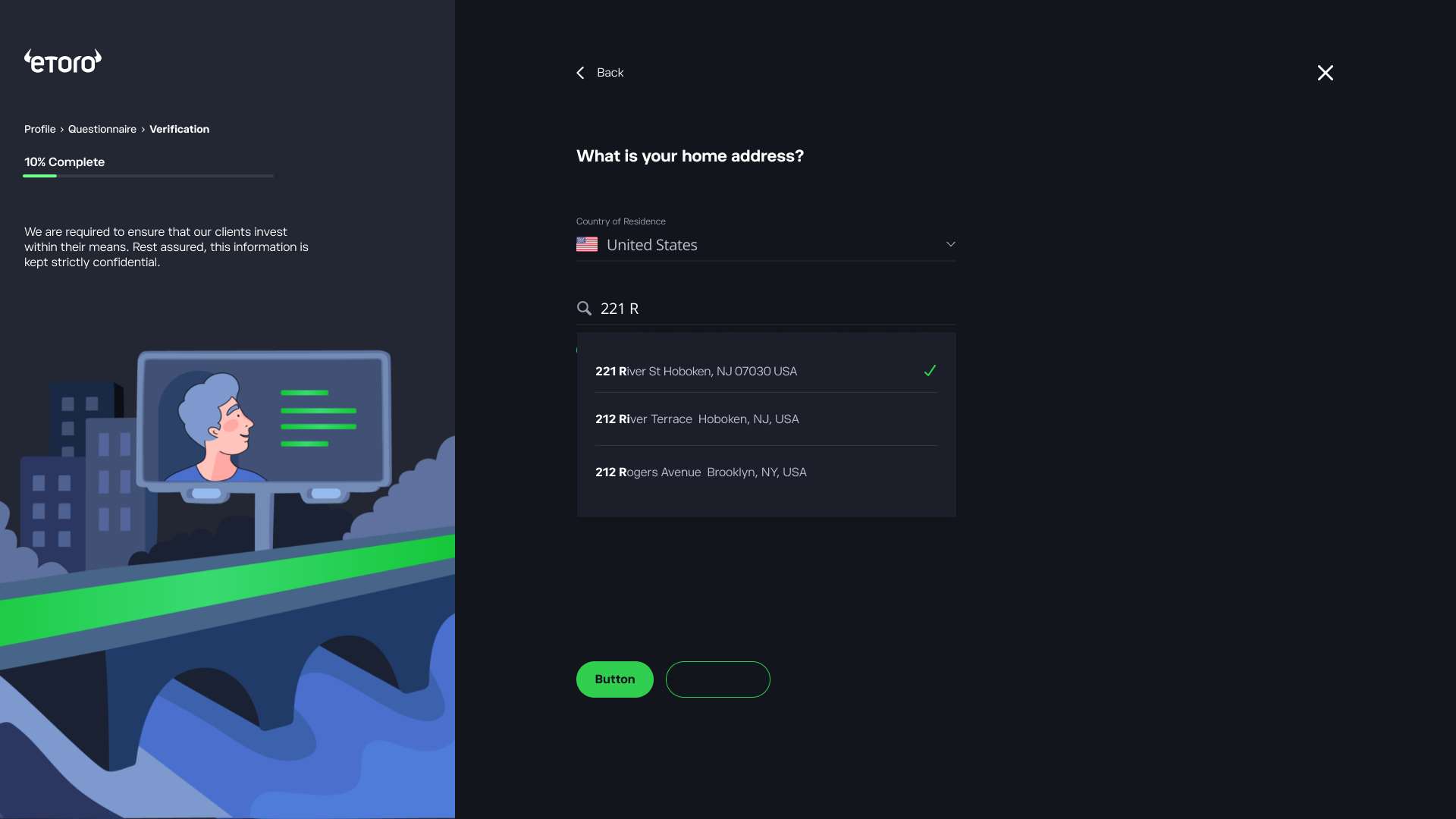
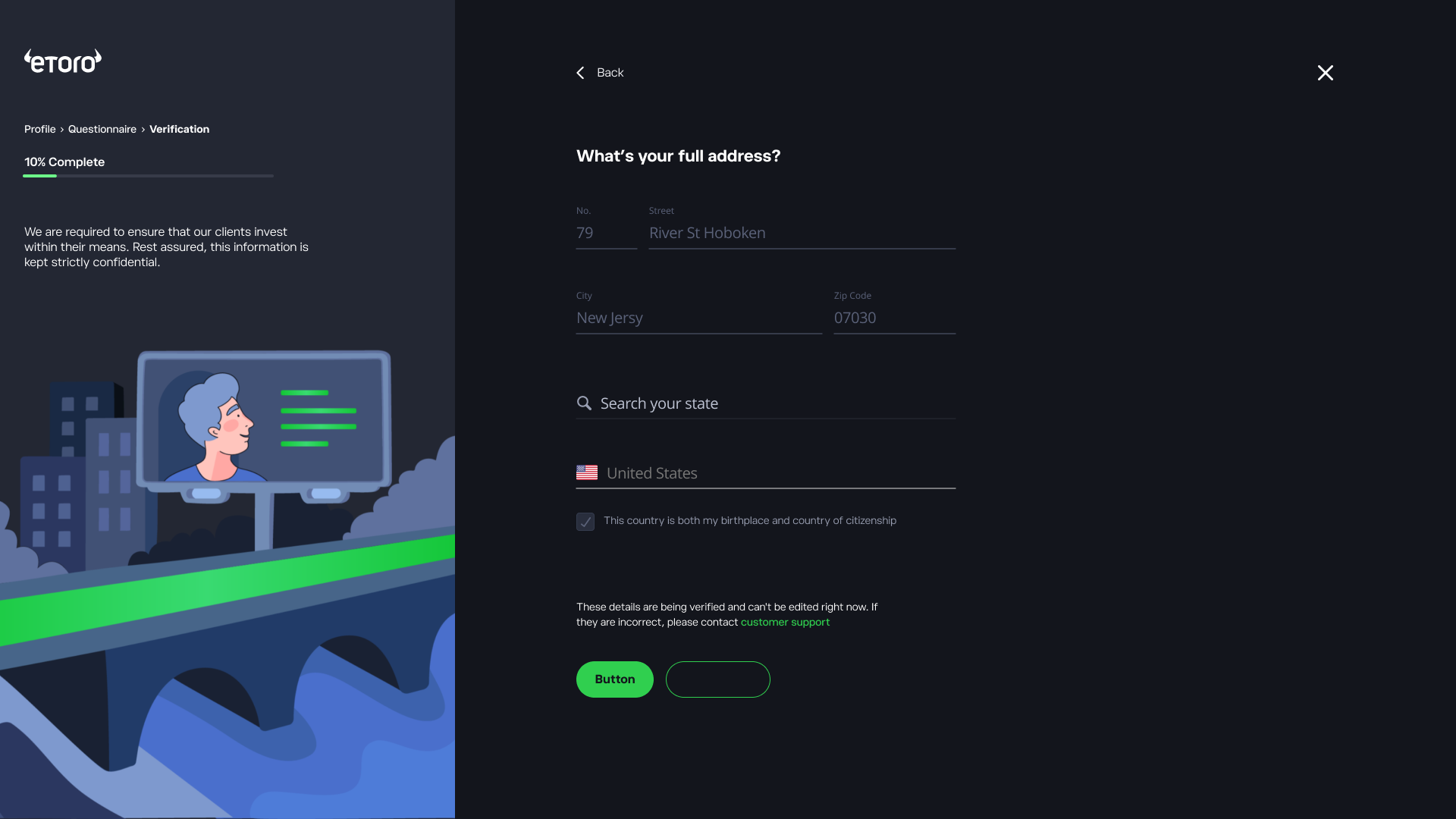
The desktop qualification flow every eToro user goes through to unlock CFDs and Copy Trading on the web. I designed it end-to-end on the previous design system — welcome checklist, financial and knowledge questionnaires, risk-reward assessment, document upload, address entry, and the gated-access states. The new-design-system version is now in progress; when it ships, it'll replace the flow below.
etoro.com / questionnaire / complete
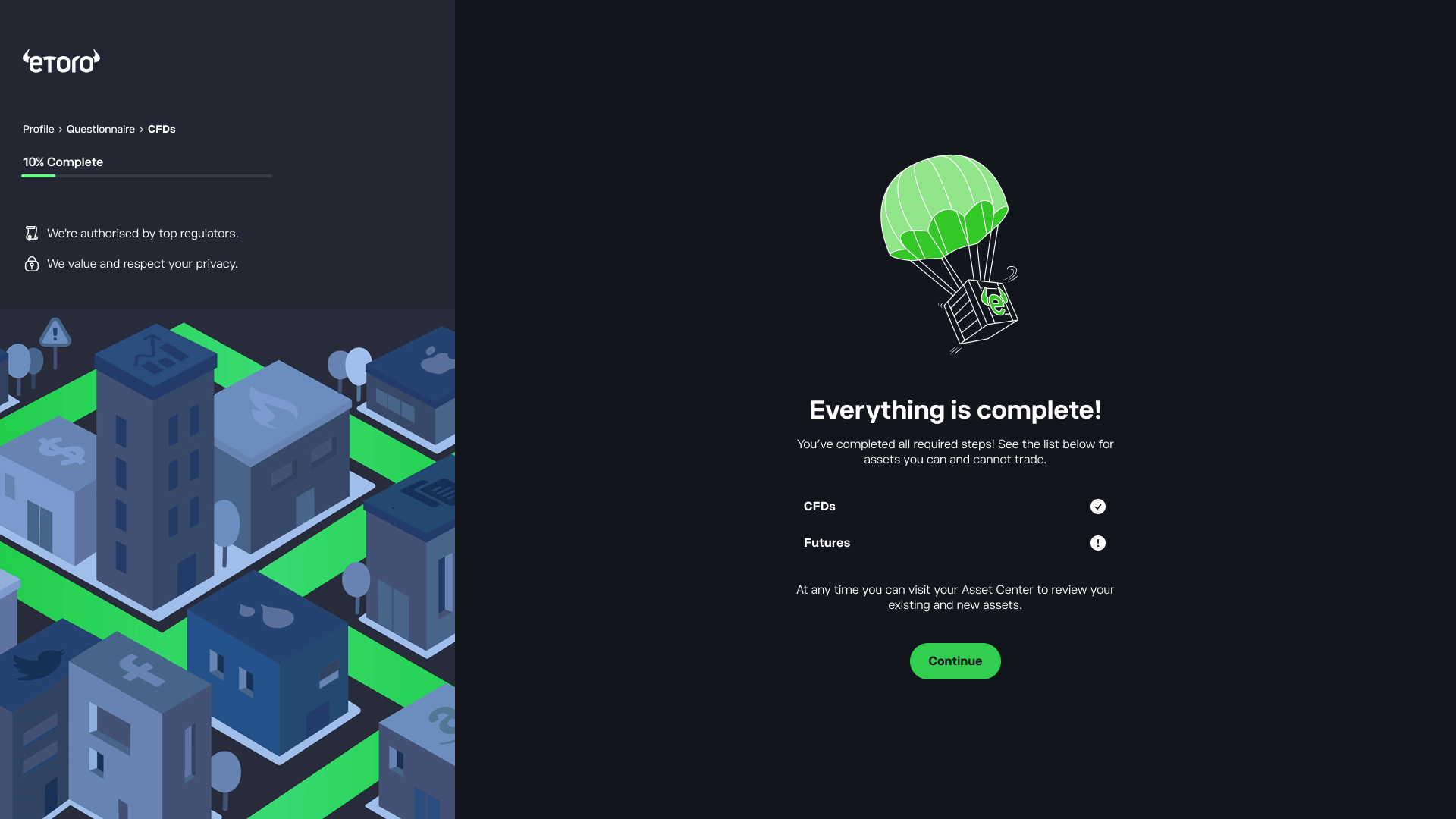
etoro.com
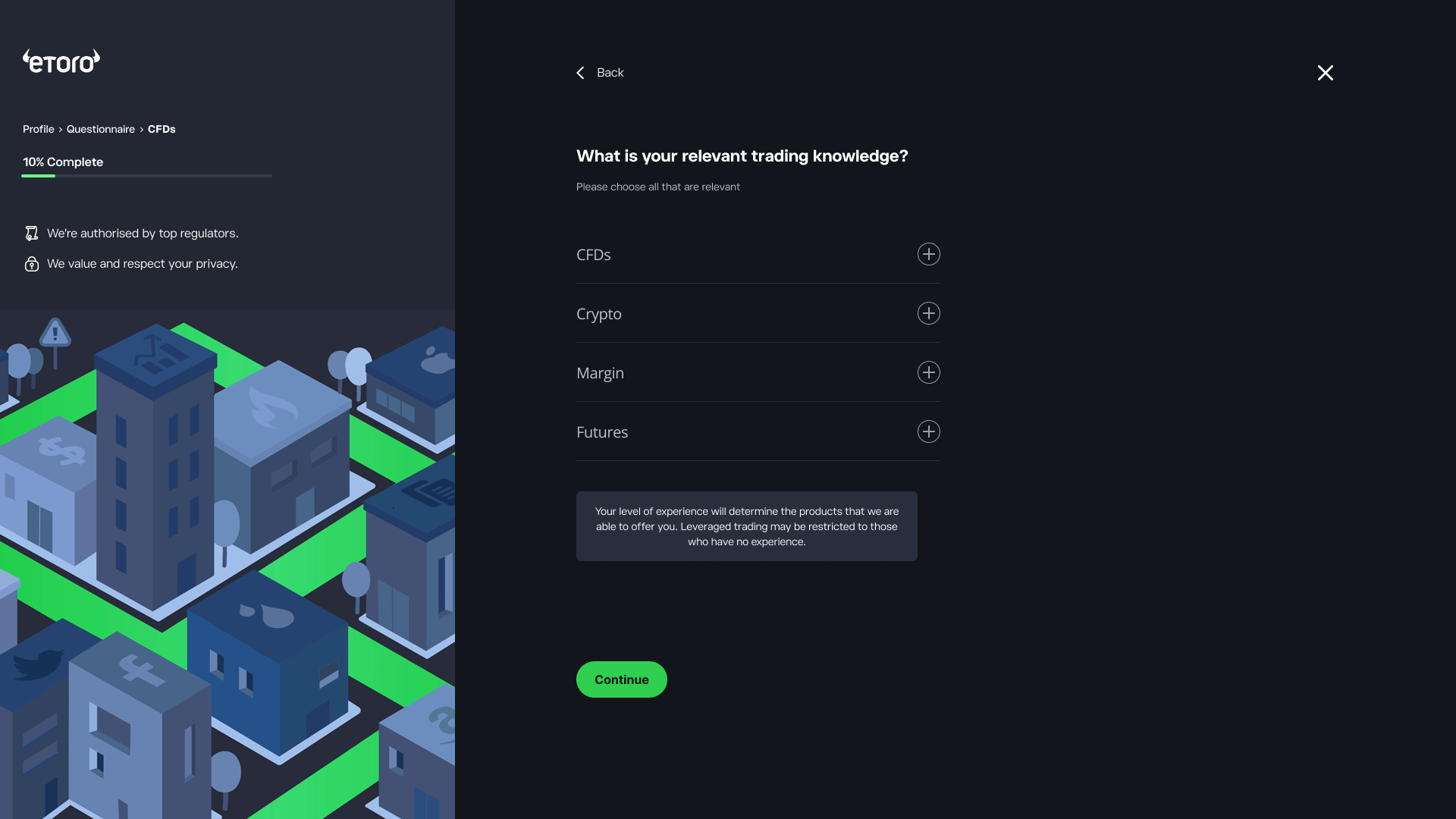
etoro.com
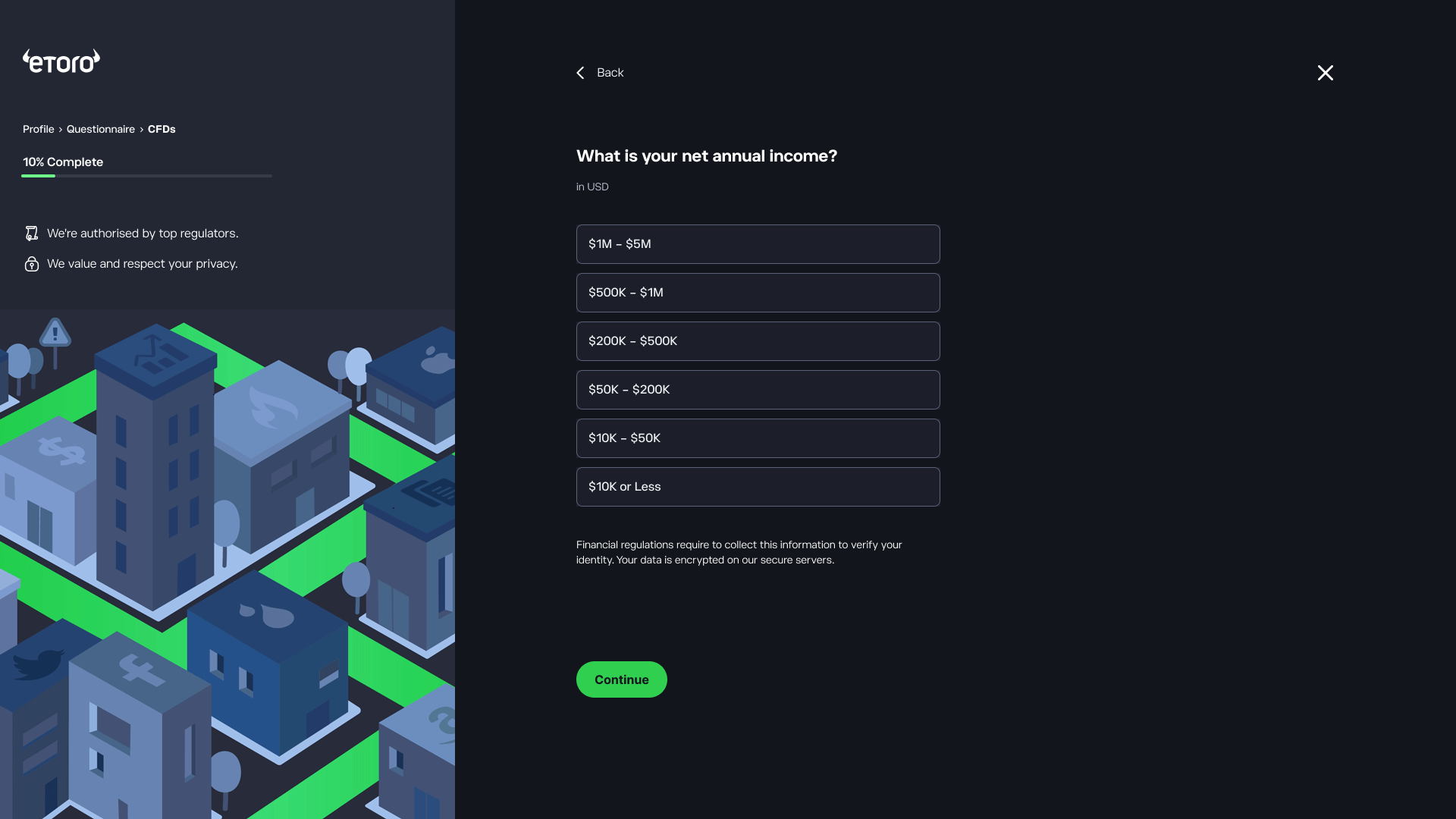
etoro.com
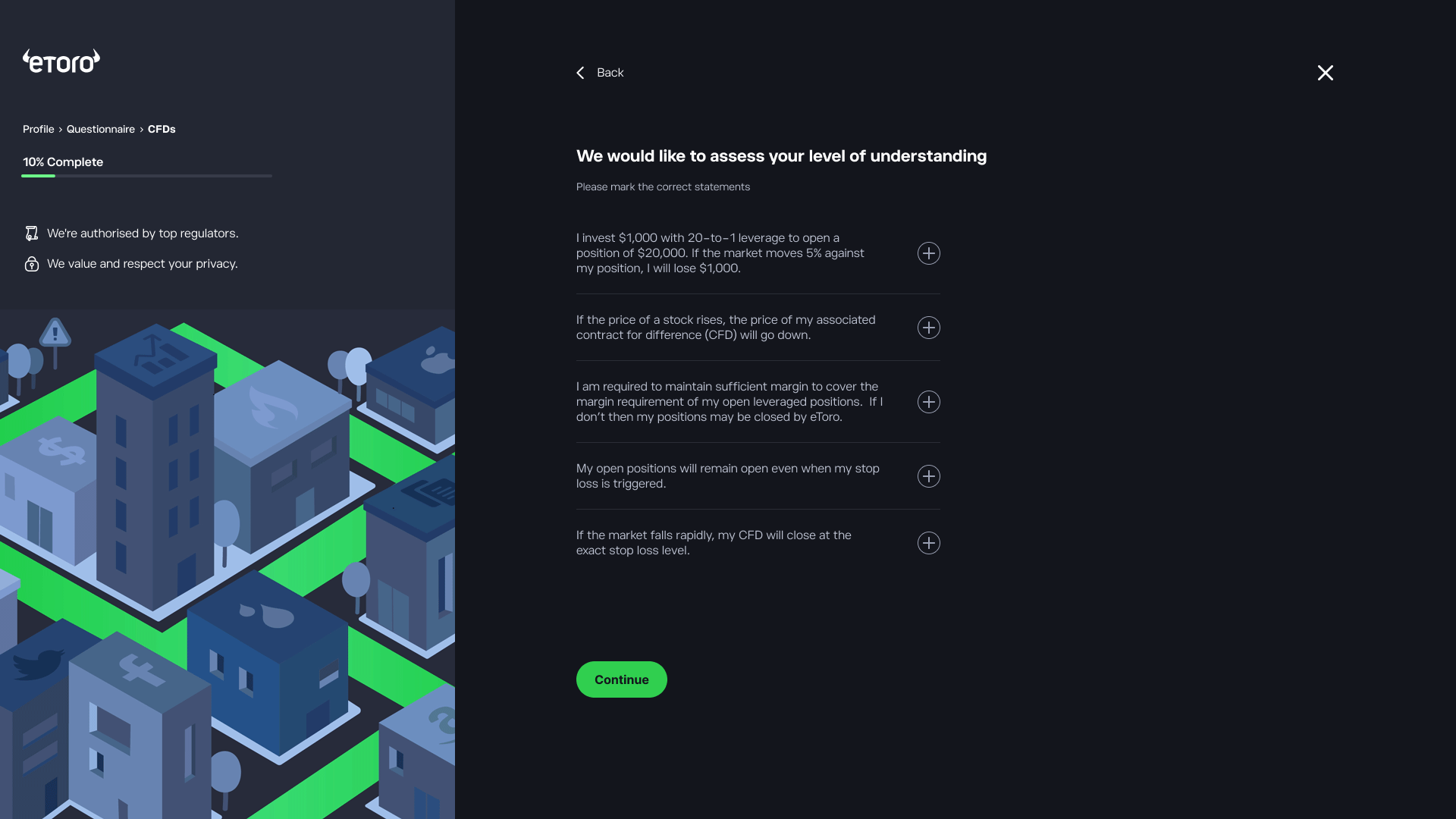
etoro.com
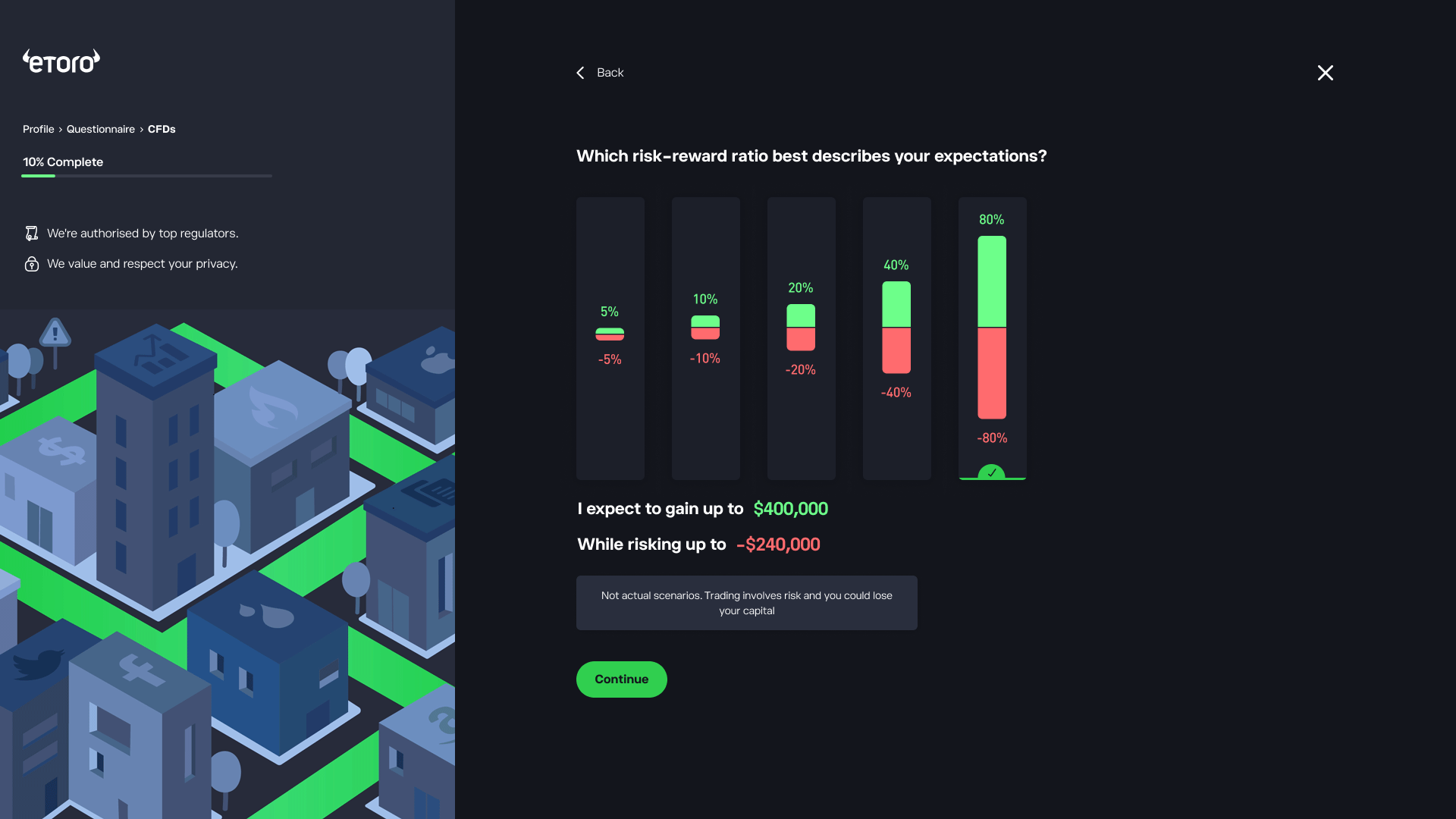
etoro.com
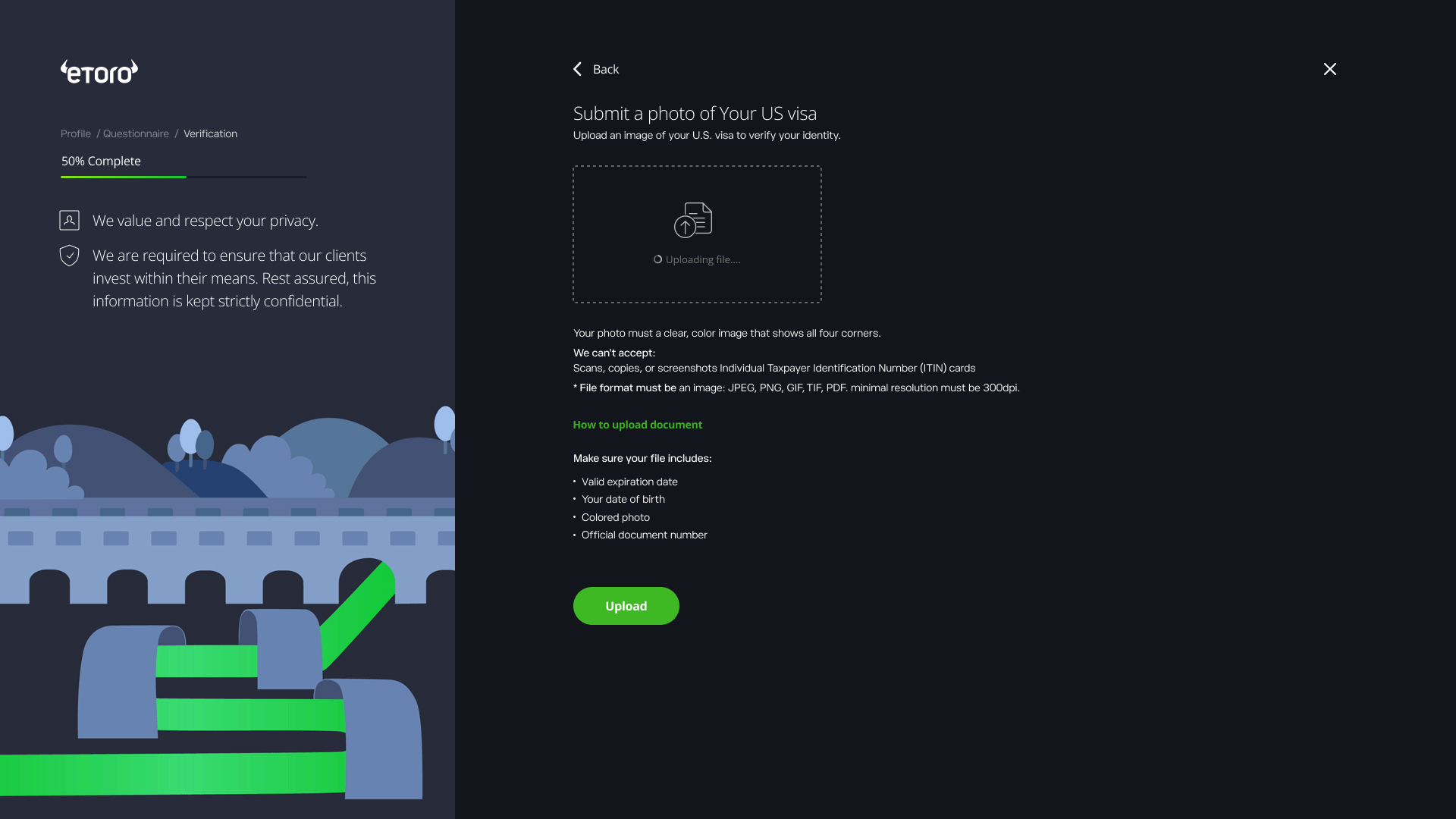
etoro.com
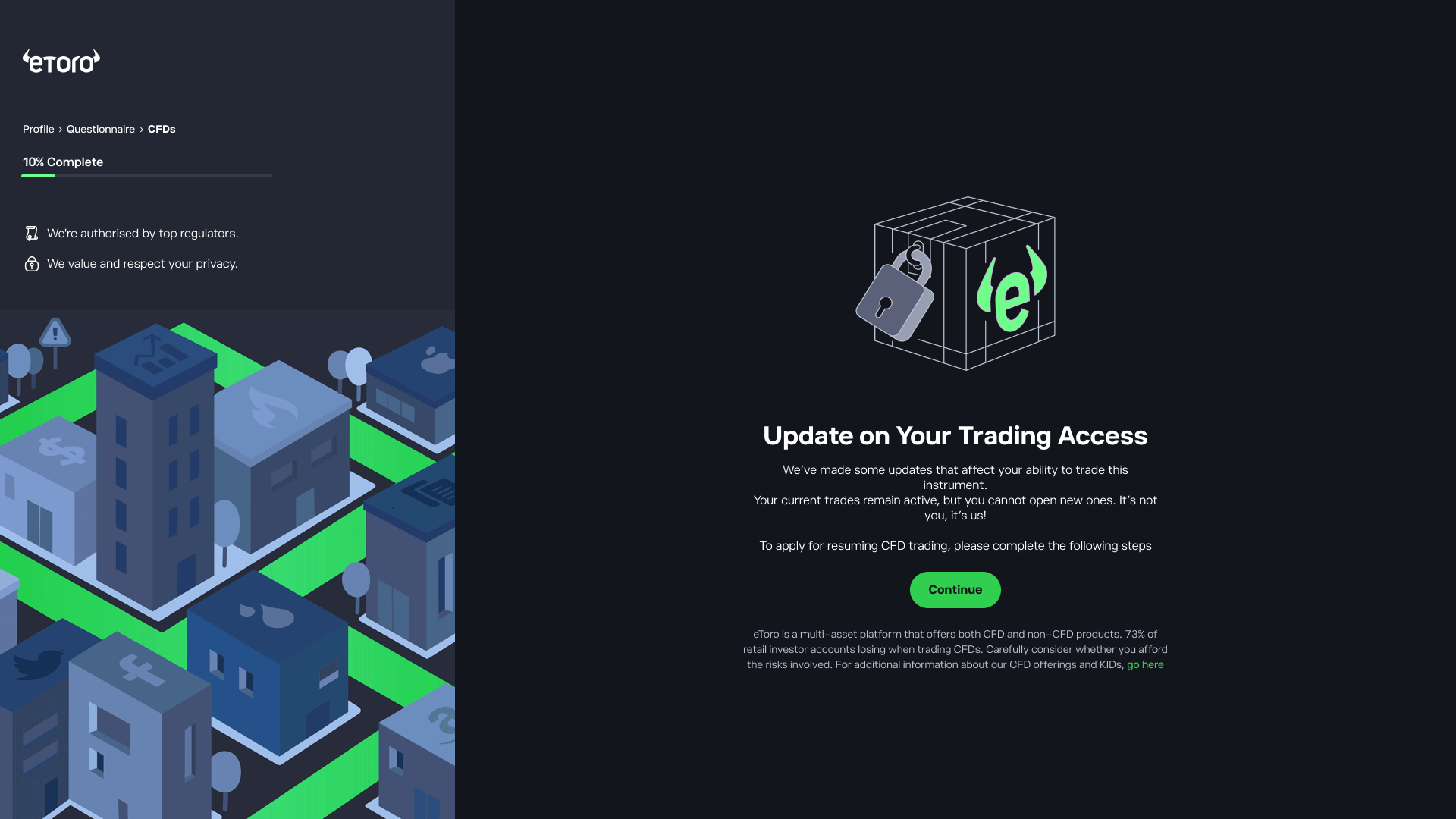
etoro.com
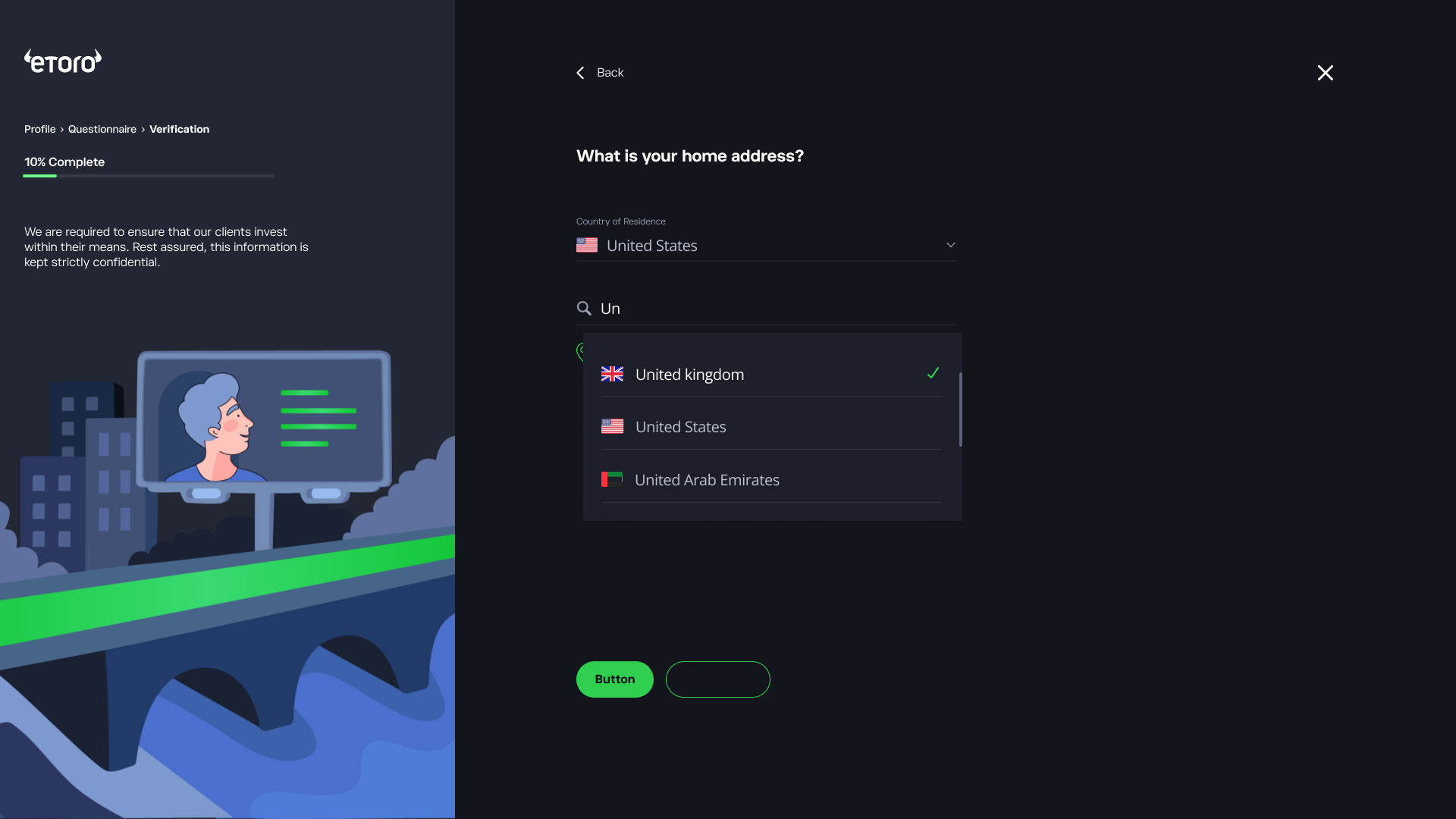
etoro.com
etoro.com
Part 01 · In parallel
A/B testing the live production flow
The existing KYC was already live in production. User interviews and data from Mixpanel and Fullstory kept surfacing specific places we wanted to improve, so we ran A/B tests directly on the live flow, addressing those screens one at a time in parallel with the broader redesign.
A/B tests
Three tests had the biggest impact on completion. For each one we set the funnel goal in Mixpanel, paired it with Fullstory sessions to see exactly what users were doing on screen, and shipped the winning variant.
-
Test 01
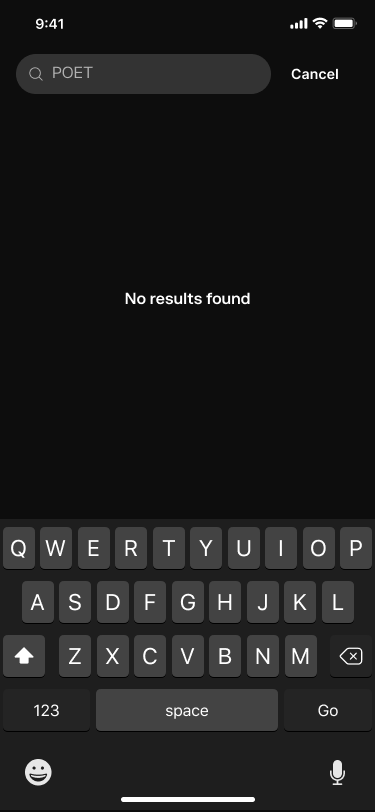
AI-suggested alternative assets
🥈 2nd place · eToro internal hackathon
Before
After
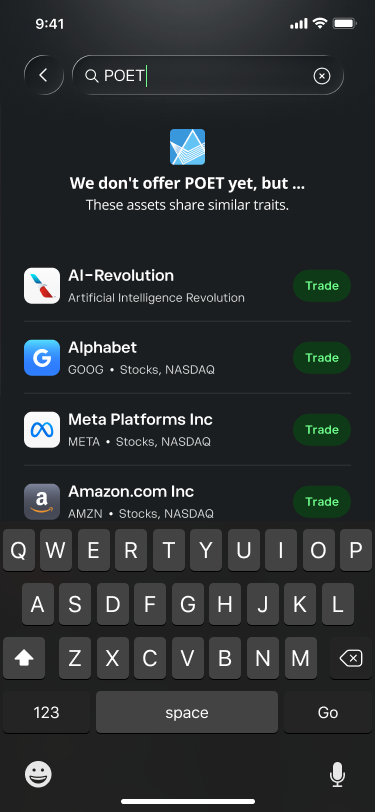
"I signed up to invest in XXX but I don't think it is available on eToro."
Real user feedback · asset name anonymisedProblem
This one didn't start as a KYC-flow test, it surfaced in user interviews. Users were closing their accounts because they couldn't find the assets they were looking for. Once we dug into the data, the scale was bigger than we expected:
- 300.9K Monthly users hitting "no results"
- 12.4% Close their account due to a missing asset
What we tried
An AI suggestion layer that proposes alternative assets, closely correlated or category-similar, whenever a user hits a dead end. The POC used GPT to generate real-time suggestions in two scenarios: empty search results, and KYC-blocked asset types. Competitive analysis confirmed Kraken, Binance, and Trading 212 weren't solving this well, which made the opportunity clearer.
Result
This test shipped and ran in production. Measured impact across users who'd previously hit a dead end:
- −5% Fewer account closures from users who didn't find what they wanted
- +12% Took the suggested alternative asset
- +6% Additional deposits from users who took the alternative
How we prototyped
Before building anything, we validated the alternative-assets logic by prompting GPT directly: given an asset the user searched for but couldn't trade, return a short list of closely-correlated alternatives, same sector, same theme, same risk profile, that we could offer them. The POC ran as a shared ChatGPT conversation; we tested it with real search terms from the data and rated the suggestions for quality and relevance. Once the patterns held up, we wired the prompt into the production search and KYC-block flows.
-
Test 02
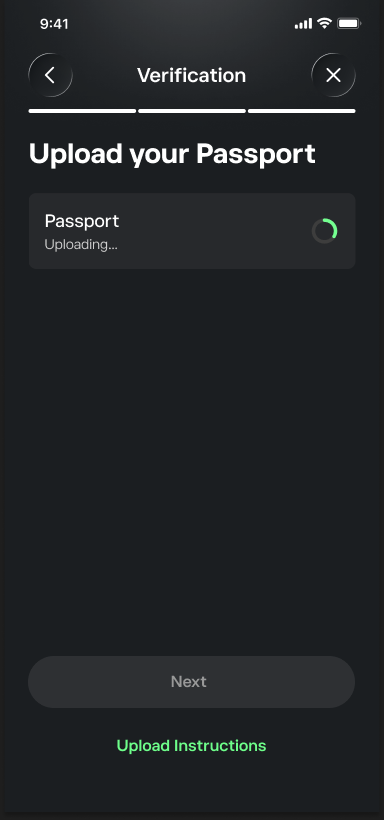
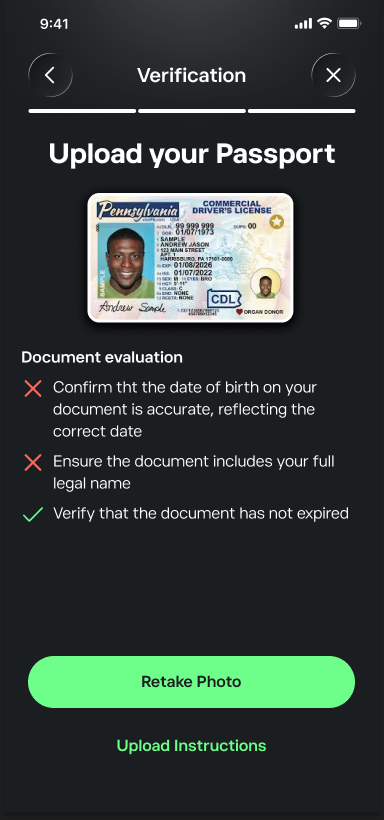
Real-time document verification
Problem
Verification was the slowest step in onboarding, 12 minutes on average, and up to 47 hours when manual review was triggered. 38% of POA documents were getting rejected (49% in France), and the rejection notice was sent by email, by which point most users had already closed the app. On top of that, 25% of users completed KYC stuck in a pending status, never sure whether they were verified, often leaving the funnel before they could deposit.
What we tried
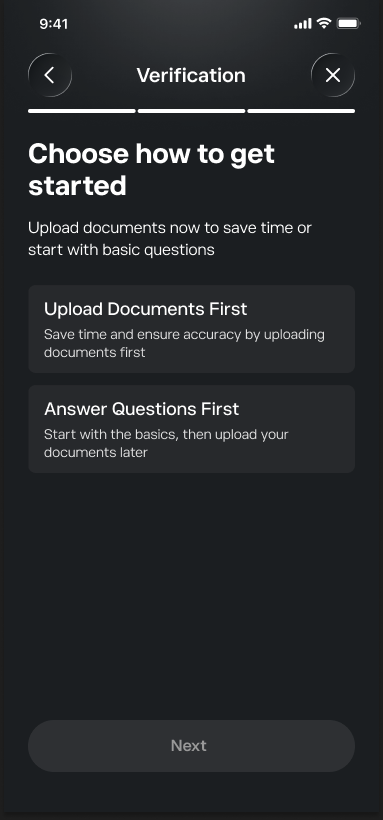
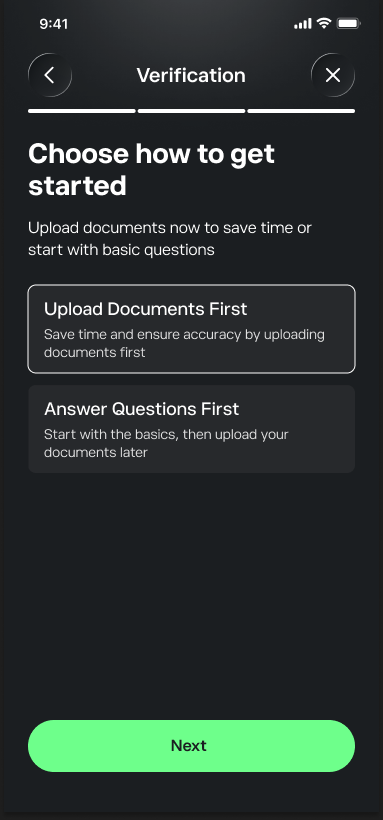
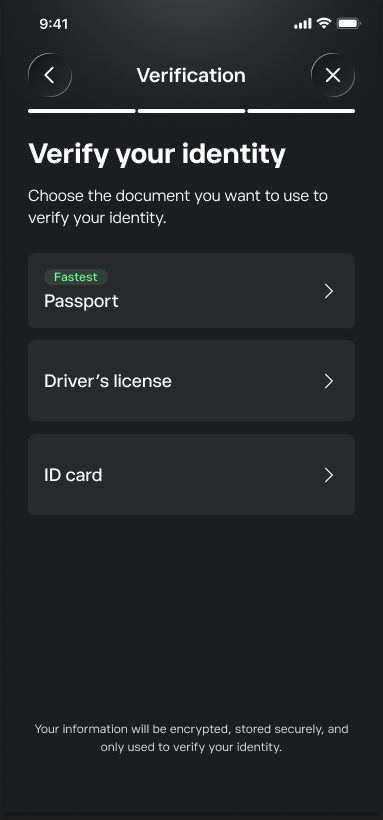
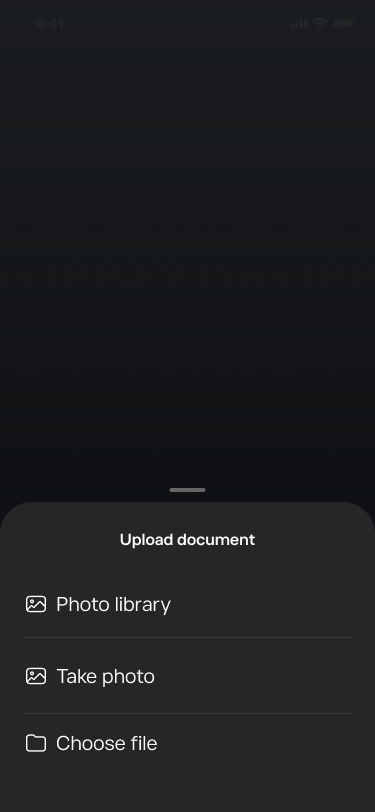
Real-time verification, moved to the start of the flow. Documents are checked instantly as they're uploaded; rejections show in-app with the specific reason rather than landing in an inbox users had already left. Paired with personalised getting-started components so the next step is always clear.
Result
Forecast impact, based on the baseline data:
- 38% POA rejection rate today, target cut to near-zero with real-time verify
- 49% France market rejection rate, worst-case baseline
- 25% Users stuck in pending KYC status after submission
- 96% Lower cost per verification ($0.75 → $0.03)
Baselines from internal data, June 2025. Will update with measured cuts once shipped.
What users were telling us
-
I already submitted the requested documents multiple times, and it never got accepted.
Real user · support email -
I can't deposit funds into my account, because I've not been verified as yet, this is so frustrating.
Real user · support email · Jan 2024 -
My experiences are non-existing because I can't deposit until I am verified and that, apparently, takes forever (still pending).
Real user · support email · Feb 2024 -
My onboarding is horrible. I'm waiting to get my account approved for a week now!
Real user · support email -
It's only showing pending verification. Now it's almost 1 week but still not verified, please help.
Real user · support email · Feb 2024 -
I'd like to invest but it's been 4 days and my verification is still pending so I can't deposit.
Real user · support email · Jan 2024
-
Step 01
-
Step 02
-
Step 03
-
Step 04
-
Step 05
-
Step 06
-
Test 03
Guided first-time deposit wizard
Problem
First-time deposits sit at the heart of activation, but the deposit card was a single dense screen that asked everything at once: amount, currency, payment method, card details. About half of registered users have no trading experience, and many were dropping out before completing. User interviews surfaced concerns about withdrawals, commissions, and how the process actually worked, but the deposit card never addressed any of them. Two patterns dominated:
- 18% First-time users who opened the payment-method dropdown
- 77% First-time deposits made with credit card
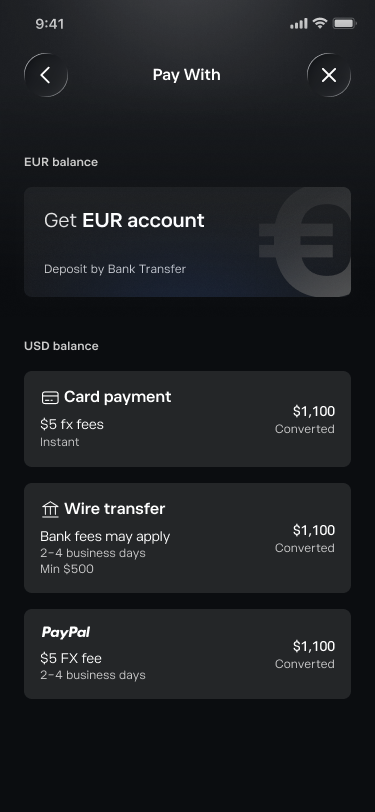
Most users assumed CC was the only option, non-CC payment methods were effectively invisible, even when they were the better fit for the user's region or amount.
What we tried
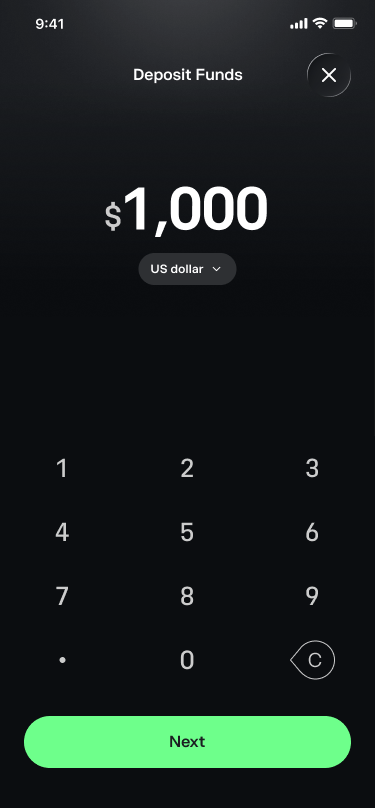
We redesigned the deposit card as a step-by-step wizard, built on four principles: one decision per page to reduce cognitive load, progressive disclosure so we never showed everything at once, push for completion via a progress bar and the Zeigarnik effect, and focus, no FAQ links or distractions that pulled the user out of context. The flow splits into Welcome → Amount → Method of payment → Payment → Confirmation → Success, with stateful behaviour: if a user closes the wizard mid-flow, it resumes exactly where they left off. MoP became a first-class screen with each option labeled by speed and fee, surfacing alternatives to CC that were previously buried. We shipped in priority order, the five markets representing 49% of FTDs first (UK, France, Italy, Spain, UAE), mobile-first.
Result
Running as an A/B test through Optimizely against a control of the legacy deposit card. Funnel goals set in Mixpanel with Fullstory sessions tracking exactly where users hesitate inside the wizard.
- FTD Primary metric
- FTT · Activation Secondary metrics
- MoP distribution Diagnostic, did non-CC options become visible?
Experiment in flight. Will update with measured numbers once it concludes.
What users were telling us
-
I could only use my credit card it seemed, or a debit card. There's no other options like wiring, no other options to work with eToro.
Real user · onboarding interview -
I can't attach my card. I don't know what's going on. I'm not sure what's going on, but I can't, and there's no other options like wiring.
Real user · onboarding interview -
That's why I haven't done anything with it. I would have put money on eToro already, but I can't seem to do anything, I'm stuck.
Real user · onboarding interview
-
Amount
-
Method of payment
Part 02 · In parallel
Redesigning the flow on the new design system
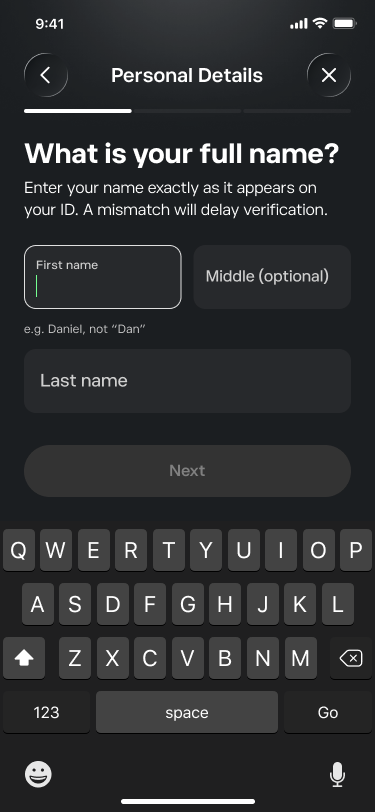
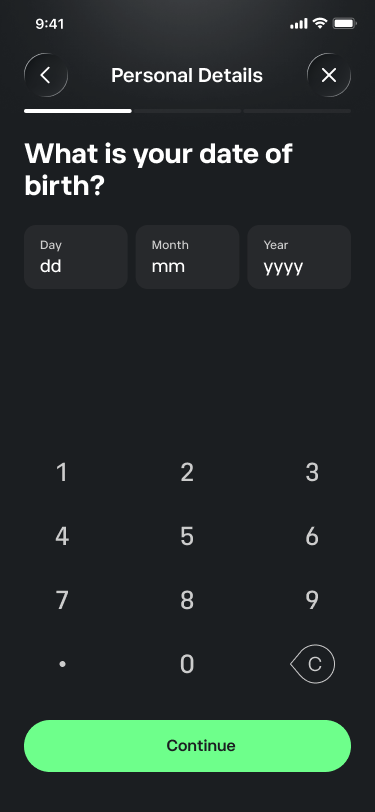
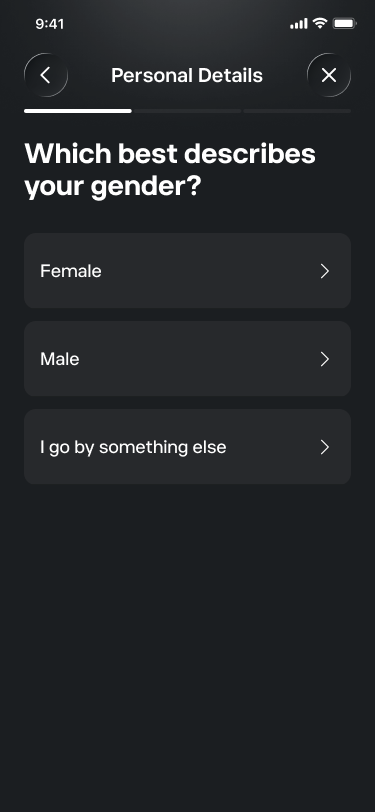
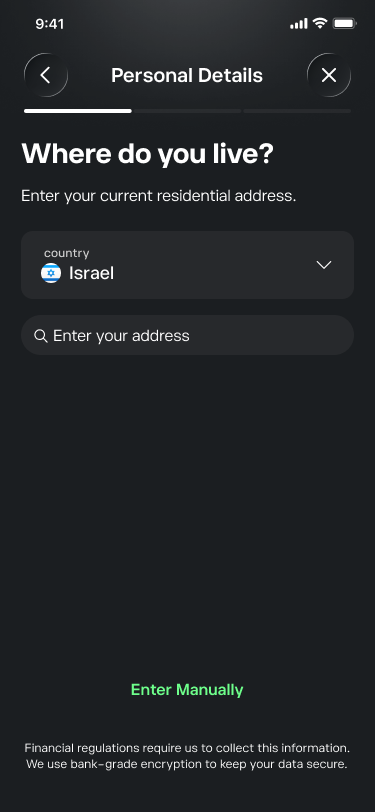
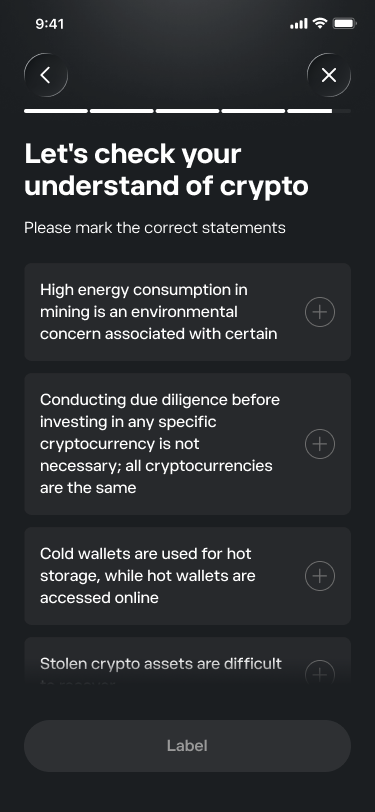
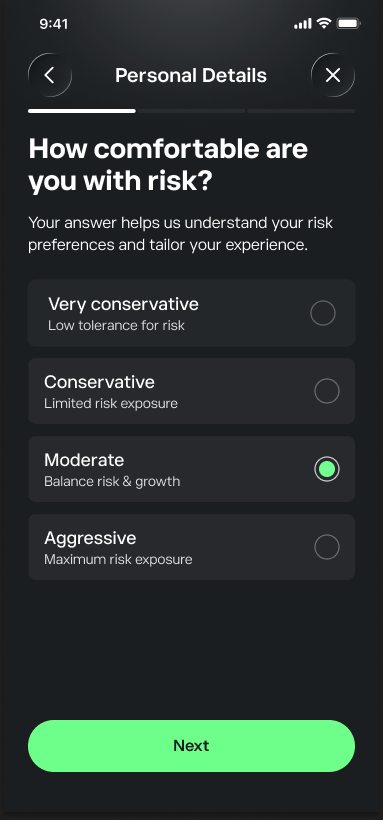
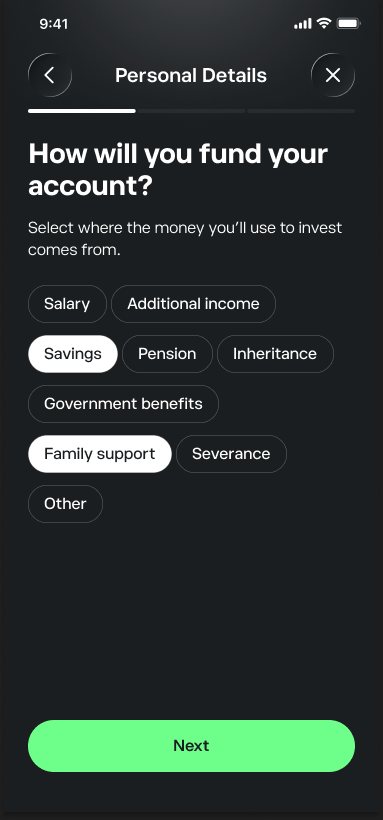
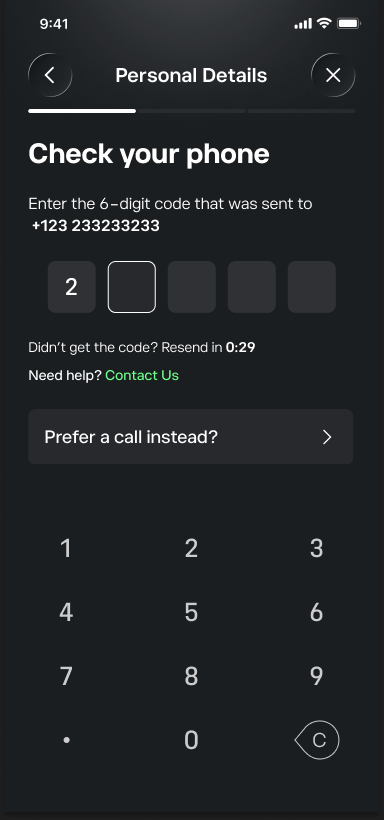
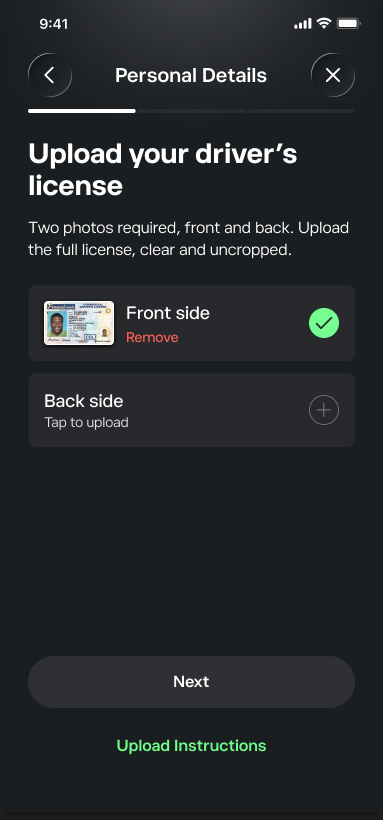
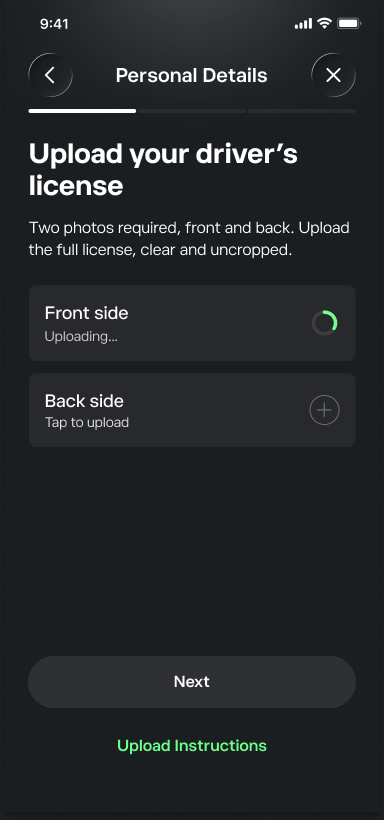
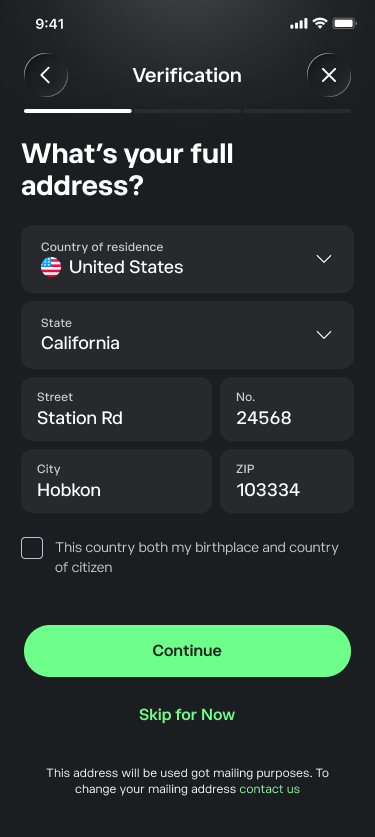
While the tests on the live flow were running, we designed the next-generation KYC from the ground up on eToro's new design system. Every step rebuilt mobile-first, name input through proof-of-identity upload, to feel less like compliance and more like getting started.
The redesigned flow