Memoth

Who said a designer can't also be the developer and the PM these days? Memoth is my answer. An AI voice note app I designed, built, and shipped solo, with Claude as my engineer.

Solo design + development · Independent product · March 2026 to Now

Product
Memoth · AI voice notes for real life
Live at
memoth.com ↗
Industry
Consumer AI · Productivity
Role
Solo · app design, marketing page, development, product strategy
Team
Just me + Claude
Duration
March 2026, ongoing
Stack
  • Claude Code

The bet

The idea came when I was pregnant. Between medical checks, ultrasounds, and a calendar that kept growing, I was forgetting things from one call to the next: what the doctor said, what I needed to ask, when the next appointment was. The information lived in fragments across my notes app, my calendar, and my memory. None of it talked to each other.

Once maternity leave started, I built the whole thing during it. Between feeds and naps, with Claude as the constant engineer.

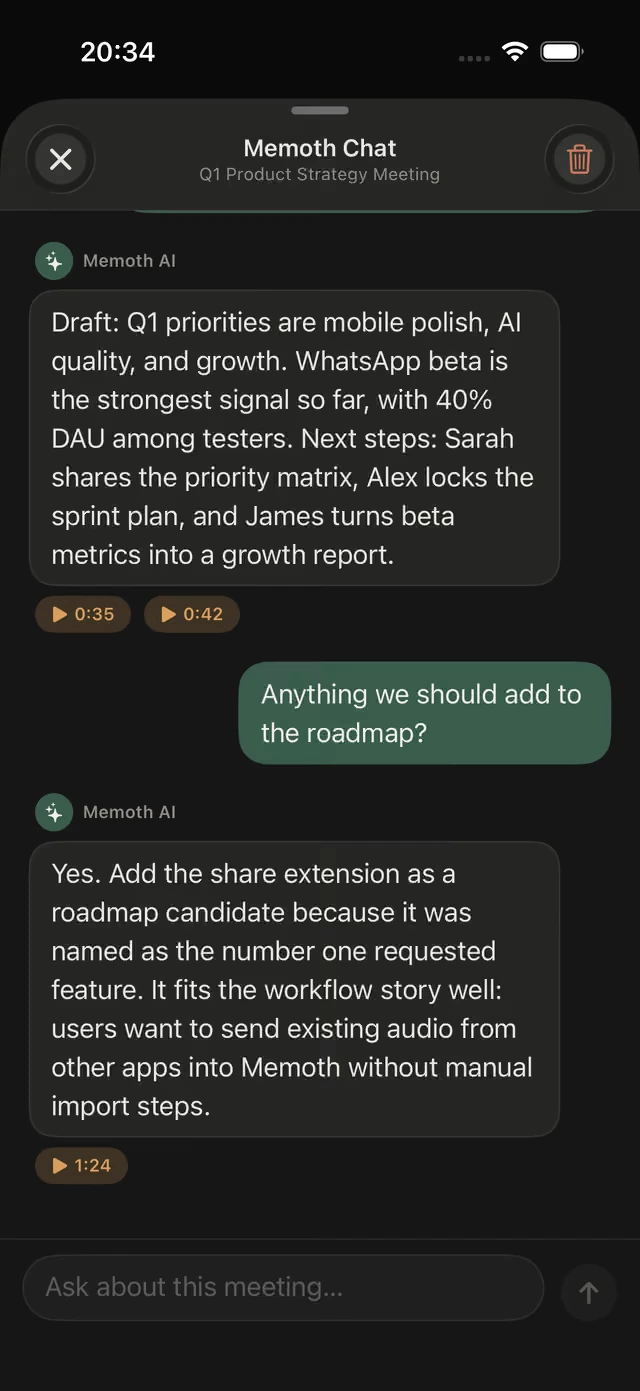
AI voice notes existed, but the experience always felt like two products awkwardly joined together: a recorder and a transcript tool. I wanted something that felt like one thing: an app that captures every conversation that matters, across every place a conversation happens, and turns it into something I can actually use afterwards.

The shape of the product: automatic detection of meetings on Mac (Zoom, Teams, Google Meet, Webex, FaceTime), one-tap recording on iPhone, iPad, and Apple Watch, a WhatsApp bot for voice memos, and transcript-to-summary-to-action-items in a single flow. Privacy non-negotiable. Everything stays in iCloud, nothing on third-party servers.

The bet behind the bet: build it solo, ship it on the App Store, and see if a designer can move from concept to live product in months, not quarters, with AI as the engineering partner.

My role

Just me. No PM, no engineer, no design partner, and unusually no Figma. I owned every decision: product strategy, app design, the memoth.com marketing page, and development. Claude was the engineer; the design lived in language, not pixels. I'd describe a screen (what it should do, what it should feel like, what to hold back) and pair with Claude Code to ship working Swift directly.

This is what "designer who ships" looks like now. The roles I used to hand off to other people (engineer, PM, sometimes even researcher) collapsed into one person plus the right AI tools. Memoth is my proof that the workflow holds up under the pressure of a real shipped product.

The workflow

The loop was tight, and unusual for a designer: I never opened Figma. I'd describe a screen to Claude in plain English: what it should do, what it should feel like, what to hold back. Claude scaffolds the Swift, I run it on device, screenshot what didn't land, feed it back. The fastest design iteration cycle I've ever had. Partly because I never had to wait on anyone else, partly because Claude doesn't have ego about killing decisions.

The thing I had to learn: how to design with words first. Specs that work for human engineers (with their ambiguity, their context, the assumptions you can lean on) didn't always work for Claude. I had to describe interaction with more precision than I ever would in a Figma file: the easing, the moments of friction, the state at every step. The closer my description of the design, the closer the build matched it.

It changed how I think about design fidelity. The right resolution to design something at depends on how cheap it is to change once it's real, and with Claude, "real" is suddenly very cheap. The canvas became language, not pixels.

See it in action

A short animated walkthrough of the app — recording, transcript, summary, action items, all in one pass.

Final designs

The full user journey, in six screens: from opening the app to extracting action items.

Memoth Library screen showing recorded meetings, interviews, and voice memos grouped by day
Library · every conversation, grouped by day and tagged by type
Memoth Ready state with template picker and large red record button
Ready · pick a template, one tap to start
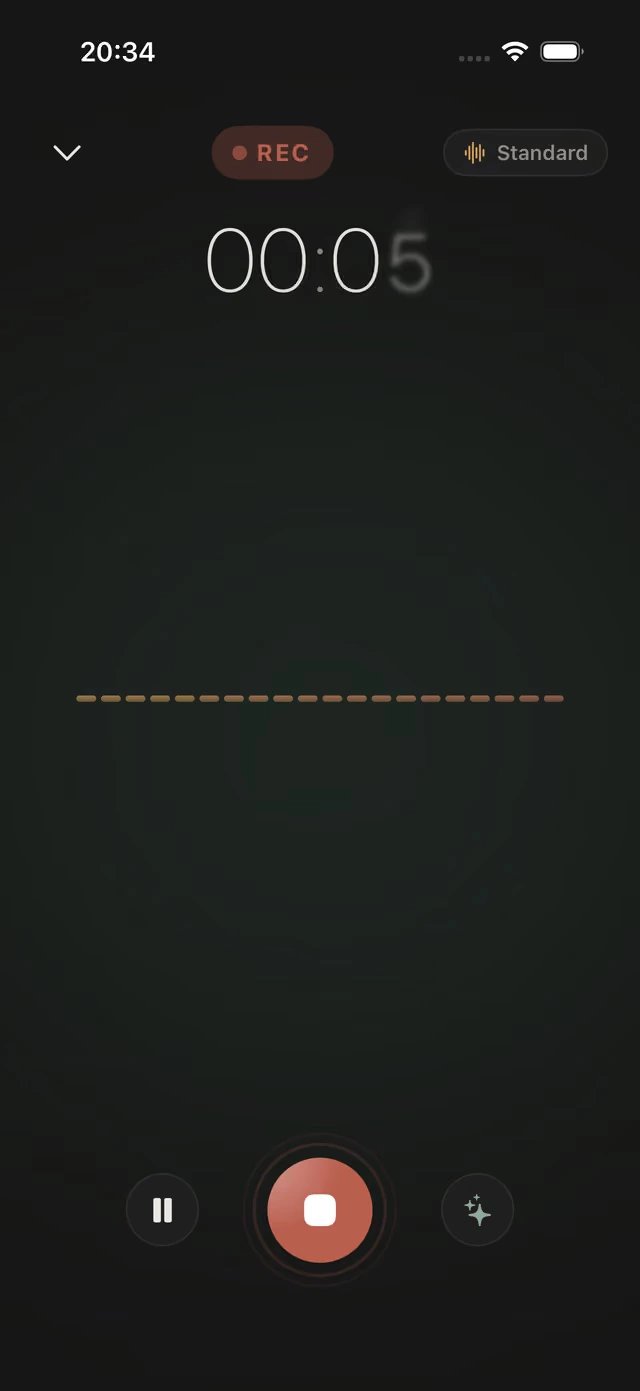
Memoth Recording in progress, animated waveform and timer at 00:48
Recording · the hero moment, an audio wave you can almost feel
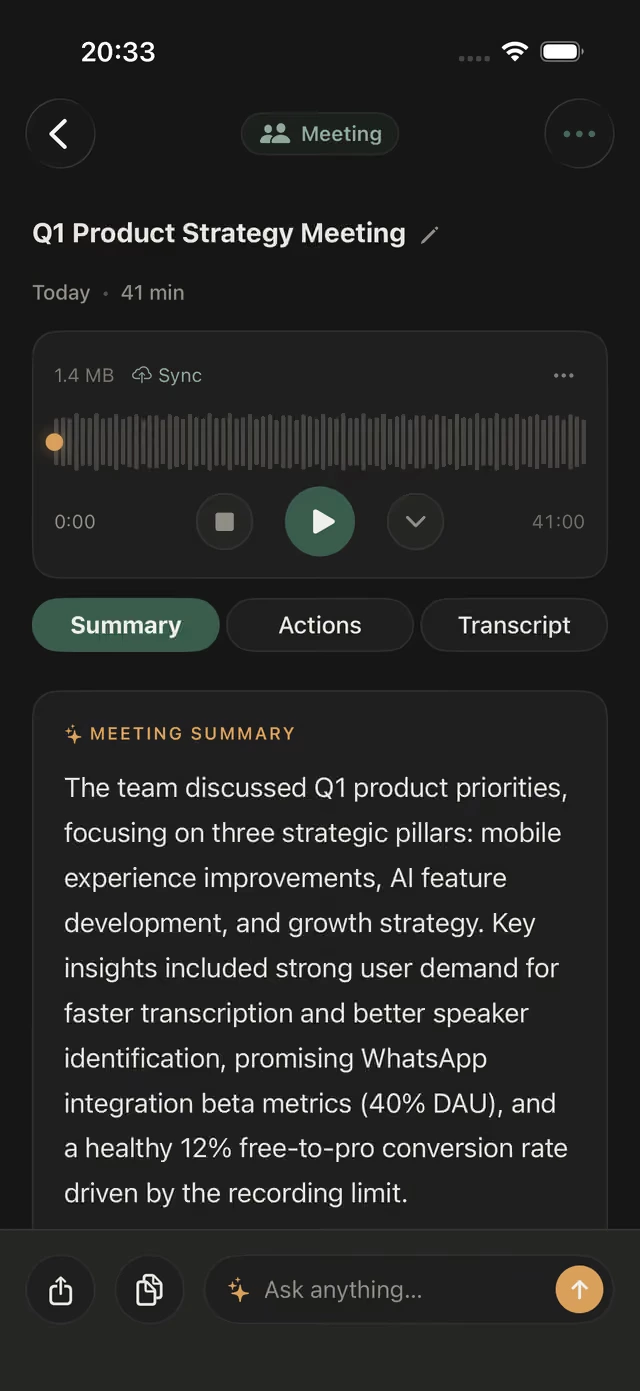
Memoth AI-generated summary of Q1 Product Strategy Meeting with key themes
Summary · AI generates the meeting brief in one tap
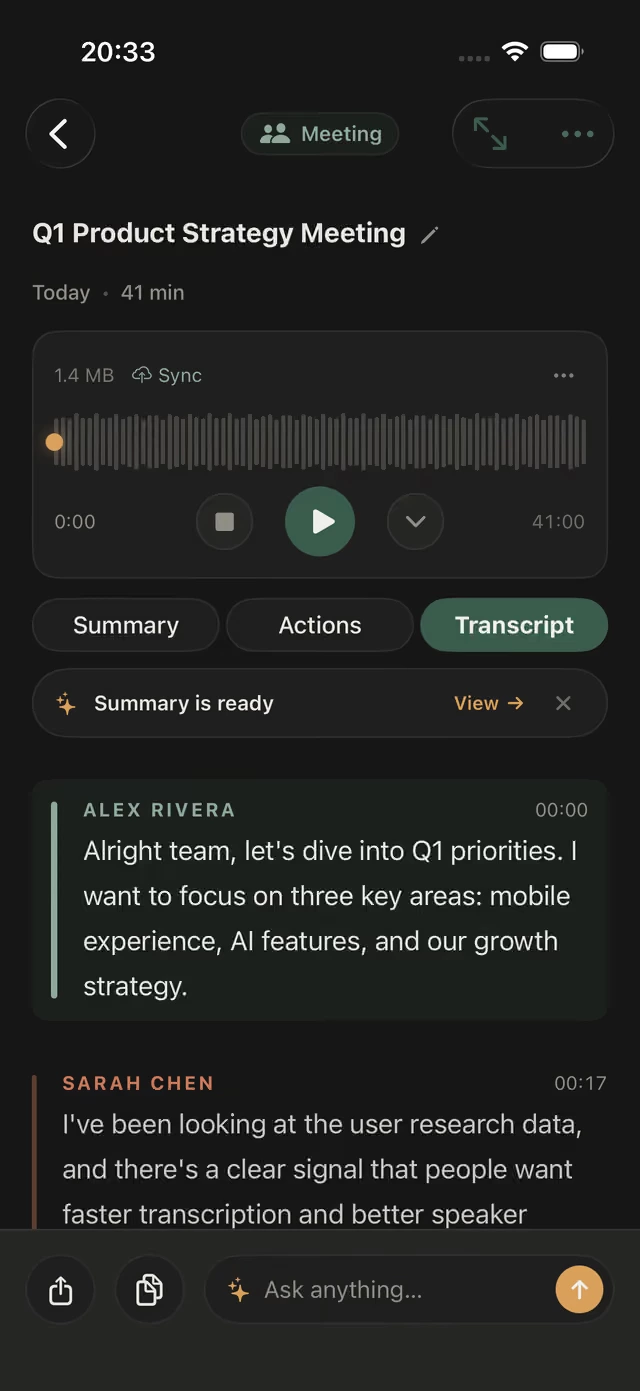
Memoth Speaker-attributed transcript with timestamped quotes from Alex, Sarah, and James
Transcript · speaker identification with timestamps
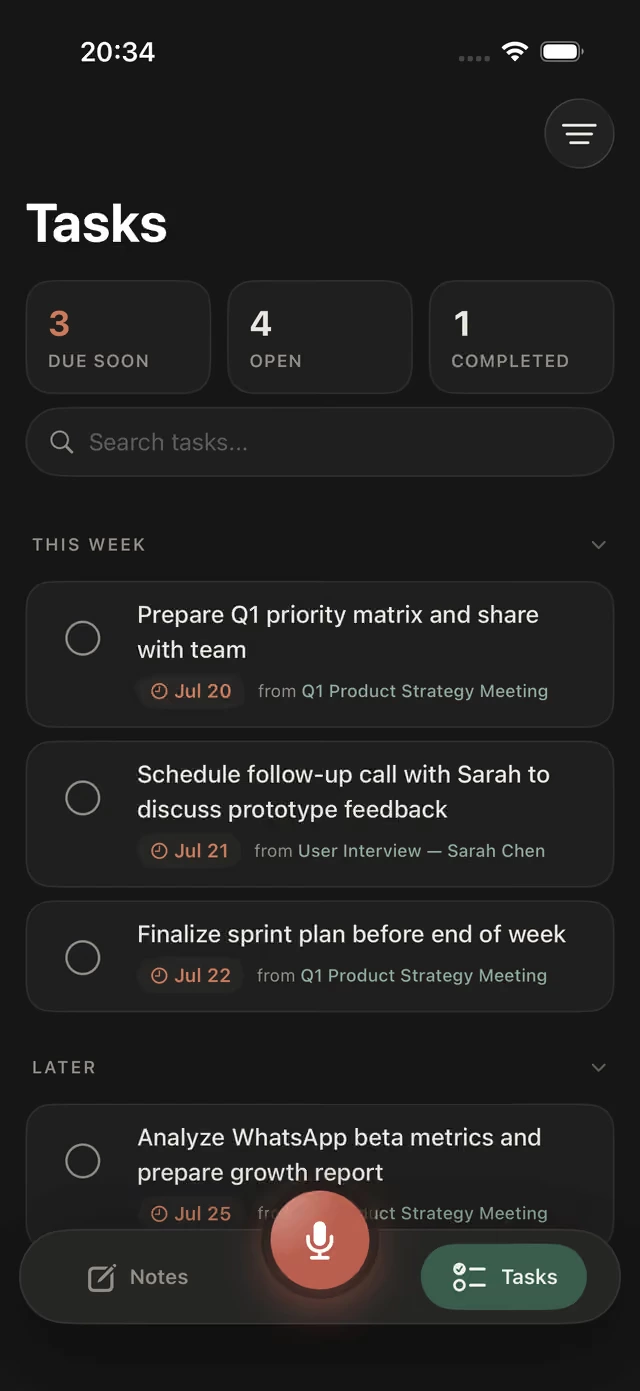
Memoth Tasks view showing action items extracted from meetings, linked back to the recording
Tasks · action items extracted automatically, linked to the conversation they came from

A few more details: the settings, integrations, and per-recording actions that make the product feel real.

Memoth Settings showing Memoth Pro subscription, iCloud sync, and preferences
Settings · subscription, usage, preferences
Memoth Integrations including Apple Reminders sync and WhatsApp bot connection
Integrations · Reminders sync, WhatsApp bot
Memoth Per-recording actions menu with share, edit, copy summary and transcript options
Per-recording actions · share, edit, copy

Reflections

The thing I didn't expect: working with Claude didn't replace my taste, it sharpened it. When engineering is suddenly cheap and infinite, every design decision becomes a choice with real consequences, fast. There's no "we don't have time to build it" shield to hide behind.

The bigger shift in how I work: I no longer think of designer and developer as separate roles. They're two surfaces of the same skill: taste applied to product, taste applied to code. The thing AI gives back isn't "I can ship faster." It's "I never have to compromise on what to ship."